
Walk into any paving showroom right now and porcelain is at the front. It is the material everyone is talking about, it fills the display boards, and it is what most people mention first when they ring me. Then they see the sandstone, and a good number of them change their minds. That is worth explaining, because sandstone is holding its position against a serious rival at a time when UK households are spending more on their gardens than they have in years. It is not doing that by accident.
It Still Gives You More Ground for Your Money
The simplest reason first. Square metre for square metre, good quality calibrated indian sandstone installation sits below porcelain, and the gap is wide enough to matter across a full patio or a paved frontage.
For a lot of people that difference is not the whole project. It is the difference between paving the area they actually wanted and paving a smaller version of it. Sandstone lets you finish the job properly rather than trimming it to fit a material budget.
No Two Slabs Are the Same, and That Is the Point
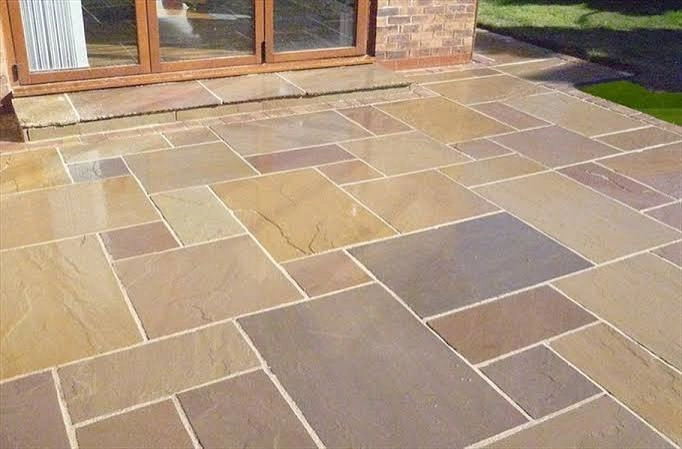
This is where sandstone genuinely beats the manufactured alternatives rather than just undercutting them. Porcelain is made to be identical. Every tile matches the last one, which is exactly what some people want. Sandstone was made by geology, so every slab carries its own veining, tone and mineral marking.
Lay a sandstone patio and it reads as a surface with depth rather than a repeated tile. The colours shift when it rains, sometimes dramatically. It picks up a patina over the years, and moss softens the edges rather than looking like a fault. People tend to describe it the same way. The patio becomes part of the garden instead of sitting on top of it. That is a hard thing to manufacture.
The Colour Range, and Why It Suits British Houses
The palette is the other reason it keeps winning. Kandla grey is the one everyone knows, and it works with modern render and grey window frames as well as anything porcelain offers. Raj green carries greens and rust tones that sit beautifully against red brick. Rippon buff and autumn brown suit warm stone cottages. Modak brings pinks and creams. Fossil mint gives you a lighter, cooler surface.
That range covers a Victorian terrace, a stone farmhouse and a new build estate house without any of them looking like a compromise. Very few materials stretch that far. Colour also deepens with weathering rather than fading, so a sandstone patio at year ten is a different thing to a sandstone patio on day one, and usually a better one.
The Riven Surface Earns Its Keep in Wet Weather
Riven sandstone has a naturally textured face, split rather than polished, and that texture gives you grip when the surface is wet.
That matters more here than in most countries. No paving is slip proof, and moss, algae, leaves and ice will reduce grip on anything. But a riven natural surface starts from a better place than a smooth one, which is worth thinking about on a path, a slope or anywhere near a step.
Sawn and honed finishes look sharper and more contemporary. They are also smoother, so if grip is a priority, riven is the safer specification.
It Is Forgiving to Lay
This one rarely gets mentioned and it shows up in the finished job. Because riven sandstone has natural texture and colour variation, small imperfections in levelling disappear into the surface. Porcelain has neither, so every tiny inconsistency in a porcelain patio is visible from across the garden.
That does not mean sandstone can be laid casually. It wants a proper compacted sub base, a full mortar bed rather than five blobs under each corner, and the back of every slab primed so it actually bonds. Spot bedding is the single most common cause of cracked slabs and staining, and it fails within a year or two.
But given a competent installer, sandstone is the more forgiving material, and forgiving materials produce better looking finished work.
The Honest Drawbacks
I would rather you hear these from me than discover them in year three. Sandstone is porous. It takes on water, which means it will stain more readily than porcelain, and it benefits from sealing every two to three years to stay looking its best.
In shade or damp corners it will grow green. Regardless of how carefully it is maintained, a north facing patio under trees will need cleaning more often than a sunny one.
Colour also varies between production batches, so ordering enough for the whole project in one go matters. Top up later and the difference can be obvious.
And quality varies. Softer, cheaper stone weathers less gracefully and can start deteriorating at the surface. The material name on the invoice tells you less than the supplier does.
Patio Sandstone Is Not Driveway Sandstone
This one catches people out, and it is worth being blunt about. The standard calibrated slabs sold in patio packs are typically around 22mm thick. They are made for feet, not for cars. Put a vehicle on them and they crack, however good the stone is.
If you want natural sandstone on a driveway, you need driveway rated material. That usually means sets, or considerably thicker slabs, laid on a full mortar bed over a proper compacted base built for vehicle loads. It can be done and it looks superb. It is simply a different specification and a different price, and anyone quoting you patio slabs for a driveway either does not know that or is hoping you do not.
Ask Where the Stone Came From
Natural stone comes out of quarries, and quarrying conditions vary a great deal. There has been real scrutiny of working conditions in some stone producing regions, and reputable UK importers now take sourcing seriously. It is entirely reasonable to ask your supplier or installer where the stone was quarried and what assurances sit behind it.
A good answer takes ten seconds. A vague one tells you something too. Ask about the technical specification while you are at it, rather than choosing on price alone.
Common Questions
Does Indian sandstone need sealing? It is not compulsory, but sealing every two to three years keeps the colour looking good and makes staining much less likely.
Will it survive UK winters? Good quality calibrated stone handles frost well. Cheaper, softer stone is where you see surface problems after hard winters.
Is porcelain simply better? No, it is different. Porcelain wins on maintenance and consistency. Sandstone wins on price, character and the way it ages. Pick the one that matches how you want to spend your weekends.
Can I jet wash it? Gently, and not too close. A strong jet damages the surface and blasts out the jointing.
Come and See It Against Your House
Sandstone is very difficult to judge from a photograph. The colours change in the rain, they change with the light, and they change depending on the brick or render they sit next to.
The useful thing I can do is bring samples to your house and put them against your walls, so you are choosing in the light your garden actually has. I will also tell you honestly whether sandstone or porcelain suits how you want to look after it, and if the stone is going anywhere near vehicles I will specify it properly rather than sell you patio slabs. Call Advanced Driveway Solutions on 07944680279 or email advanceddrives2020@gmail.com to arrange a visit. You will find us at 10 Altham Rd, Morecambe LA4 4UG, United Kingdom. Bring the colours you like the look of and we will see how they behave outside your own front door.