
You have probably seen the headlines. New driveway rules. Councils cracking down. Homeowners facing enormous fines. Some of it is fair. A lot of it is a 2008 regulation being repackaged as breaking news, with a frightening number attached to make you click.
So here is the plain version. What the rules genuinely say, what has actually changed recently, and the two things people most often get caught out by. One thing first. This is general guidance, not legal advice, and local authorities do apply their own detail. If your situation is unusual, a phone call to your council planning department costs nothing and settles it.
The Main Rule Is Not New
The rule everyone is writing about came in during October 2008, and it has not changed since. It says this. If you are laying more than five square metres of hard surface in front of your house, and that surface is impermeable, and the rainwater drains off onto the road or pavement, you need planning permission. That is the whole rule. Three conditions, all of which have to be true at once.
Under five square metres, you are fine whatever you use. Permeable surface, you are fine at any size. Water draining somewhere on your own land, you are fine at any size. It exists because paved front gardens send rainwater straight into drains that were never designed for it, and that contributes directly to surface water flooding. It is a drainage rule wearing a planning rule’s clothes.
What Counts as Permeable
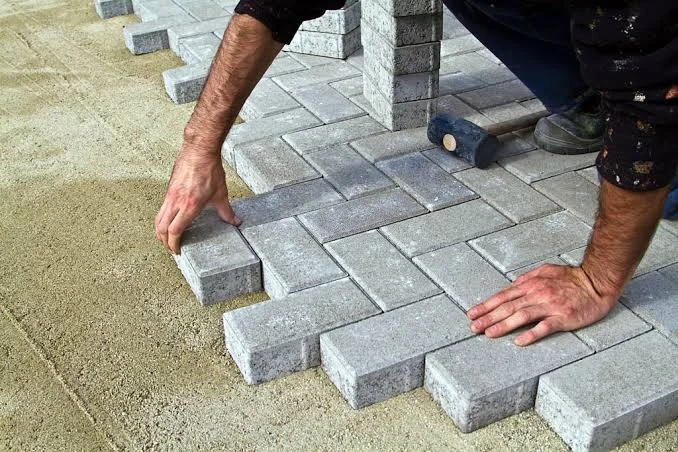
Permeable means water passes through the surface into a free draining base and then into the ground. Gravel is permeable. Permeable block paving is permeable, which is a specific product with wider joints and an open graded base, not standard block paving. Porous asphalt is permeable. Resin bound is permeable, provided what sits underneath it is too. For driveway installation, understanding the difference between permeable and impermeable surfaces is important when choosing the right option. Impermeable covers standard tarmac, concrete, imprinted concrete, and ordinary block paving on a normal base. One trap worth naming. Resin bound and resin bonded sound almost identical and behave completely differently. Bound is porous and generally keeps you inside permitted development. Bonded is sealed and does not. If a quote says resin, find out which one.
The Escape Route Most People Miss
You do not have to use a permeable surface. You have to stop the water reaching the highway. Direct the runoff to a lawn, a planted border or a soakaway within your own boundary, and an impermeable driveway stays permitted development at any size. A channel drain feeding a soakaway does the job. This matters because it means you can still have the tarmac or the imprinted concrete you wanted. You simply have to give the water somewhere to go, and pay for that part of the work.
What Has Genuinely Changed Recently
Three things, none of which are the ones in the headlines.
Electric vehicle charge points. In May 2025 the government removed the planning permission requirement for charge point installations in England, bringing them under permitted development. Wall mounted units facing a highway are now allowed, which previously caught a lot of people out. In April 2026 further plans were announced covering cross pavement charging for households without private parking. Size limits and listed building rules still apply, and running a cable across a public footpath is not permitted regardless.
Sustainable drainage for new developments. Schedule 3 of the Flood and Water Management Act has been brought in for new developments in England, with separate approval bodies signing off drainage strategies. This is aimed at builders and estates rather than someone replacing a driveway, so it probably does not touch you, but it is the source of a lot of the confusion.
Solicitors are now checking. This is the practical change that affects real homeowners most. Conveyancers routinely ask about driveway planning compliance during a sale. A drive laid without the permission it needed can become a problem years later, at the worst possible moment.
The Dropped Kerb Is a Separate Thing Entirely
This is the single most common misunderstanding I come across. Permission for the driveway and permission to drive across the pavement are two different applications, handled by two different departments. Crossing a footway or verge to reach your property needs a dropped kerb, applied for through your council’s highways team, and it is required whether or not the driveway itself needs planning permission. It also usually involves a specified contractor and a fee. People discover this after the drive is finished. Sort it first.
Where the Rules Are Different
Wales broadly mirrors England on the five square metre rule, though larger schemes can also need separate sustainable drainage approval. Scotland and Northern Ireland operate under their own planning systems, so check with the local authority directly rather than assuming. Listed buildings and conservation areas carry extra restrictions everywhere. If your house is either, ask before you plan anything.
What Actually Happens If You Ignore It
Not a fixed fine, whatever the headlines say. There is no set penalty figure for a non compliant driveway. What can happen is an enforcement notice from the council requiring the work to be put right, which might mean adding drainage or, at worst, taking the surface up. Ignoring an enforcement notice is where the serious costs start. Realistically, the bigger risk for most people is the quiet one. It sits there for years, and then it surfaces during a sale when a solicitor asks the question and you cannot answer it.
A Short Checklist Before You Commit
- Is the area more than five square metres?
- Is the surface permeable or impermeable?
- Where is the rainwater going, and is that somewhere on your own land?
- Do you need to cross a pavement to reach it?
- Is your property listed or in a conservation area?
- Does your quote include the drainage that the answers above require?
That last one matters. If a quote does not mention drainage anywhere, either it is not needed or it has not been thought about.
Common Questions
Do I need permission to replace my existing driveway? Replacing like for like generally does not trigger a new application, but if you are changing the surface to something impermeable or extending the area, the rules apply as if it were new.
Is permeable block paving the same as normal block paving? No. It is a different product, laid on an open graded base designed to let water through. Standard block paving on a normal base is treated as impermeable.
Does the rule apply to a driveway at the side or rear? The five square metre rule targets front gardens draining to the highway. Land that does not drain to the road is treated differently, though good drainage is still expected.
Who is responsible if it turns out to be non compliant? The homeowner. That is why it is worth asking your installer to put the drainage arrangement in writing.
Ask Before You Dig, Not After
Every driveway I quote for gets this checked at the survey, because it is far cheaper to design the drainage in than to retrofit it after an enforcement letter.
Come out and I will tell you which category your drive falls into, what the water needs to do, and whether a dropped kerb application is needed. It all goes in the written quote, so you have a record of it if a solicitor ever asks. Call Advanced Driveway Solutions on 07944680279 or email advanceddrives2020@gmail.com to arrange a visit. You will find us at 10 Altham Rd, Morecambe LA4 4UG, United Kingdom. If you already have quotes, check whether any of them mention drainage at all. It tells you a lot.