
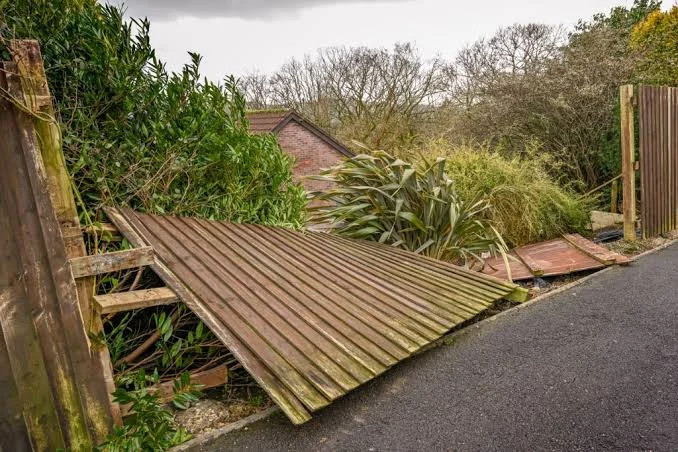
Every storm season, gardens up and down the country wake up to the same sorry sight. A fence that stood fine yesterday is now leaning across the lawn, flat on the ground, or hanging on by a single post. The natural instinct is to get it back up as fast as possible, prop the panel back in, and move on. I understand the urge completely, but it is often the most expensive mistake you can make.
The reason is simple. What you can see is rarely the whole story. A fence that comes down in a storm has almost always failed somewhere you cannot see, and repairing the visible damage without checking the rest just sets you up to do it all again. In this guide I want to explain why a proper assessment should come before any repair, and what a good one actually looks for.
A fallen fence is rarely just a fence problem
Here is the first thing to understand. When wind brings a fence down, the panel is usually the victim, not the cause. Panels are designed to catch the eye, not to hold the structure up. The real strength of any fence lives in its posts and the footings that hold those posts in the ground.
So when a fence blows over, the question that matters is not “which panel do I need,” but “why did the structure give way.” Nine times out of ten the answer is a post or a footing that failed, and that is exactly the part a quick repair tends to ignore.
The hidden damage you cannot see
Once you start looking properly, storm damage runs deeper than most people expect. Posts are the usual weak point. A post can look fine above ground while being rotten, cracked, or crumbling right at the soil line, where moisture sits and does its damage over the years. The storm did not break a healthy post. It finished off one that was already failing.
The footings are the next hidden problem. If the original posts were not set deep enough, or were held in too little concrete, the wind can lever them loose in the ground. Sometimes a post is left still standing but wobbling, its footing cracked or working free, ready to go over in the next strong gust. Experienced fencing contractors will also check for damaged gravel boards, loosened fixings, and strain passed along to the neighbouring sections, as all can add to the picture. None of this shows up if you only look at the panel lying on the grass.
Why a quick repair so often fails
This is the heart of the matter. If you slot a new panel into posts that are rotten or footings that have already failed, you have treated the symptom and left the cause untouched. The fence might look fixed for a few weeks, but the first proper blow of the next storm season brings it straight back down, and now you are paying for the same job twice.
A repair is only as good as what it is anchored to. Spending money on a fresh panel while ignoring a failing post is like putting a new tyre on a bent wheel. The real fix starts underground, and you cannot know what needs doing there until someone has actually checked.
The safety side worth respecting
There is a safety angle too, and it is worth taking seriously. A storm-damaged fence can be genuinely hazardous. Posts can snap under tension, leaning sections can fall without warning, and there are often splintered timber, exposed nails, and screws hidden in the debris. If the fence sits near a power line, a shed, or anything else that took damage in the same storm, the risks multiply.
Rushing in to heave a heavy, unstable fence back upright on your own is how people get hurt. A calm assessment first, by someone who handles this regularly, keeps you and your garden out of harm’s way.
Boundaries, neighbours, and insurance
Storm-damaged fences also come with a few practical complications that an assessment helps sort out. The first is ownership. It is not always obvious who is responsible for a particular boundary fence, and getting that wrong can cause friction with a neighbour or leave you paying for something that was not yours to repair. A professional can help you think this through before work starts.
The second is insurance. Many home insurance policies treat fences differently from the rest of the property, and some exclude storm damage to them altogether. Where a claim is possible, having the damage properly assessed and documented gives you a far stronger case than a few hurried phone photos. Knowing where you stand before you spend a penny is always worth the short wait.
What a professional assessment actually checks
So what does a proper assessment involve? It goes well beyond glancing at the fallen panel. A good one checks the condition of every post along the run, not just the one that went over, looking for rot, cracks, and movement. It examines the footings to see whether they are sound, too shallow, or already failing. It considers the ground itself, since waterlogged or soft soil changes what the repair needs.
Crucially, it weighs up exposure. A fence on an open, windy boundary faces very different forces to one tucked between two houses, and that affects how deep the posts should go, how much concrete they need, and even which style of panel makes sense. The outcome is a clear, honest verdict on what genuinely needs replacing, what can be saved, and whether a targeted repair or a full replacement is the smarter spend.
Getting the repair right the first time
Once the assessment is done, a proper repair puts the strength back where it belongs. That means setting posts to the correct depth, holding them in sound concrete footings sized for the exposure, and fitting panels and gravel boards that suit the conditions your garden faces. Get those fundamentals right and the fence stands firm through the storms to come, rather than becoming a yearly repair job.
This is the same principle that runs through all good outdoor work. The parts you cannot see decide how long the parts you can see will last. Skip the groundwork and you are simply buying time until the next collapse.
How I assess and repair storm-damaged fences
This is where experience counts. With over 20 years working on outdoor projects across Lancashire and the surrounding areas, we start every storm-damaged fence with a proper look before we quote a single repair. We check the posts, the footings, and the ground, weigh up your boundary’s exposure, and tell you honestly what needs doing and what does not.
My aim is to get your fence standing securely again, built to handle the next storm rather than fall to it. We keep you informed from the first assessment to the final fix, use quality materials and proven methods, and price the work fairly. You get a fence that stays up and peace of mind that the job was done properly.
Fence down after a storm?
If a storm has brought your fence down, or left it leaning and looking unsafe, let’s take a proper look before any repair begins. I will assess the damage, check what is really behind it, and give you a clear, no-obligation quote with no pressure to book. You walk away with honest advice and a firm price, whether or not you decide to go ahead.
Ready to get started? Call Advanced Driveway Solutions on 07944 680279, or come and see us at 10 Altham Rd, Morecambe LA4 4UG. Let’s get your fence standing securely again, built to stand up to whatever the next storm brings.