
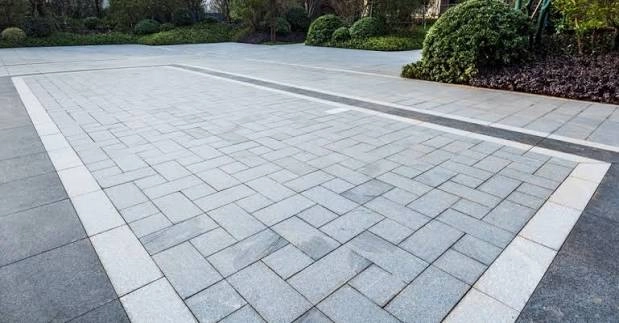
When most people imagine a new block paving driveway, they picture the fun part. The colour of the blocks, the laying pattern, the border detail, the way it will set off the front of the house. I understand that completely, because the surface is what you see every day. But if you want that driveway to still look just as good in fifteen years, the part that truly matters is the one nobody ever sees: the sub-base.
The sub-base is the foundation beneath the blocks, and it does the real work. Get it right and your driveway stays flat, firm, and handsome for decades. Get it wrong and the most beautiful blocks in the world will sink, rut, and fail. In this guide I want to explain what a sub-base actually is, why it matters more than anything else in the build, and how to make sure yours is done properly.
What a sub-base actually is
A block paving driveway is built up in layers, a bit like a cake, and each layer has a job. At the bottom is the natural ground, known as the sub-grade. On top of that sits the sub-base, which is a thick layer of crushed stone, compacted down hard. Above the sub-base goes a thin laying course of sharp sand or grit, then the blocks themselves, and finally a fine kiln-dried sand brushed into the joints to lock everything together.
The sub-base is the big structural layer in the middle of all that. It is usually built from a material called MOT Type 1, a graded crushed stone that packs down into a dense, stable, load-bearing bed. It is not glamorous, and you will never see it once the job is done, but it is the single most important part of the whole driveway.
The blocks are not what carries the weight
Here is the idea that surprises people most. The blocks on the surface are not really what holds your car up. Each block is relatively small, and on its own it would simply press into the ground under any real weight. What carries and spreads that load is the compacted sub-base underneath.
Think of the sub-base as the layer that takes the weight of a vehicle and shares it out evenly across the whole area, so no single point gets overloaded. The blocks give you the surface, the pattern, and the finish, but the structure lives below them. That is exactly why skimping on the sub-base is so damaging. You are weakening the one layer that everything else depends on.
What a proper sub-base involves
A sub-base that will last is built in careful stages. First comes excavation. The ground is dug out to the correct depth, with all the soft topsoil and loose material removed, so the foundation is built on something solid rather than on soil that shifts and holds water. Under-digging to save time is one of the most common shortcuts, and one of the most harmful.
Next, a geotextile membrane is usually laid over the sub-grade. This clever fabric separates the soft ground below from the clean stone above, stopping the two from mixing over time and helping the whole structure stay stable. Then the MOT Type 1 stone goes in, and this is where the craft shows. It is laid and compacted in layers, not dumped in one go, because only thin layers can be compacted all the way through. Each layer is driven down hard with a plate compactor or roller until it is dense and locked solid. The falls for drainage are built in at this stage too, so water always has somewhere to run.
Why depth and compaction decide everything
Two things about the sub-base matter above all others: how deep it is, and how well it is compacted. Depth has to match the job. A garden path that only ever sees feet needs far less than a driveway that carries cars day in and day out. As a rough guide, a pedestrian area might need around 100mm of compacted sub-base, while a driveway taking vehicles typically needs 150mm or more. Build a driveway on a path-depth base and it will fail under the weight it was never designed to hold.
Compaction is just as vital. Loosely laid stone, however deep, will settle and sink once it is loaded, pulling the surface down with it. Properly compacted stone becomes a solid, interlocked mass that barely moves at all. This is why doing it in layers matters so much, and why rushing this stage is such a false economy. The compaction you cannot see is what keeps the surface you can see dead flat for years.
What happens when the sub-base is skimped
When a driveway starts going wrong, the sub-base is almost always the real reason, even though the problem shows up on the surface. You see dips and sunken patches where the base settled. You see ruts forming along the lines where tyres sit. You see water pooling where the falls were lost, blocks that rock or lift, a wavy, uneven surface, and weeds pushing through as the structure breaks down.
The cruel part is that the blocks themselves might be perfect. A homeowner paid for lovely paving, it looked spotless for a few months, and then the ground beneath it moved because the foundation was never built to hold. Once a sub-base fails, there is no patching the surface to fix it. The driveway has to come up and be rebuilt from the ground, which means paying for the whole thing twice.
Why this is exactly where cheap quotes cut corners
Here is the uncomfortable truth about the sub-base. Because it is buried and invisible, it is the easiest place in the whole project to cut corners without the customer noticing. An installer chasing the lowest possible price can dig shallower, use less stone or a cheaper material, skip the membrane, and rush the compaction. On the day the job finishes, that driveway looks identical to one built properly.
The difference only appears months or a year later, once the weather and the weight have done their work, and by then the cheap crew is long gone. This is why the lowest quote is so often the most expensive choice in the end. When you compare prices, you are really comparing what happens below the surface, even though that is the one part you cannot inspect.
A driveway is only as strong as what holds it up
So when people ask me what the most important part of a block paving project is, my answer never changes. It is not the blocks, the colour, or the pattern. It is the groundwork. Everything you love about a driveway, the neat lines, the flat surface, the years of trouble-free use, is only possible because the foundation beneath it was built to carry it. Treat the sub-base as the priority and the rest looks after itself.
How I build block paving that lasts from the ground up
This is where experience makes all the difference. With over 20 years laying block paving across Lancashire and the surrounding areas, we give the sub-base the respect it deserves on every single job. We excavate to the correct depth, lay a quality membrane, build up MOT Type 1 in compacted layers, and set the falls properly, so the foundation is right before a single block goes down.
My aim is to give you a driveway that stays flat, firm, and looking its best for decades, not one that sinks the moment the guarantee runs out. We keep you informed from the first quote to the final finish, use quality materials and proven methods, and price the work fairly. You get a driveway built to last, from the ground up.
Planning a block paving driveway?
If you want a block paving driveway built properly, with a foundation that will still be holding firm long after the job is done, let’s talk it through before you commit to anything. I will look at your space, explain exactly how I would build it, and give you a clear, no-obligation quote with no pressure to book. You walk away with honest advice and a firm price, whether or not you decide to go ahead.
Ready to get started? Call Advanced Driveway Solutions on 07944 680279, or come and see us at 10 Altham Rd, Morecambe LA4 4UG. Let’s give you a block paving driveway that stays flat, firm, and beautiful for many years to come.