
Tarmac is one of the most popular driveway surfaces in the country, and for good reason. It is tough, smart, and great value. What a lot of homeowners do not realise is that many standard tarmac driveways, especially older ones or ones laid on a tight budget, quietly fall short of the drainage rules that now apply to front driveways.
The surprising part is that tarmac itself is not the problem. The gap almost always comes down to how the rainwater was dealt with. In this guide I want to explain what the rules actually ask of your driveway, why so many standard tarmac drives miss the mark, and how easy it is to get a tarmac driveway that ticks every box.
What the drainage rules ask of your driveway
Let’s start with the rule that matters most for a home. If you lay a new or replacement front driveway larger than five square metres using a surface that water cannot pass through, and that water drains onto the public road, you need planning permission. If you use a surface that lets water soak through, or you drain the rainwater into your own land instead, the driveway stays as permitted development and needs no application.
The idea behind this is sustainable drainage, often shortened to SuDS. The goal is simple. Rainwater should soak back into the ground close to where it lands, rather than rushing off hard surfaces and onto the road, where it adds to flooding and overloads the drains. Your driveway plays a real part in that, which is why the way it handles water has become so important.
Why standard tarmac so often falls short
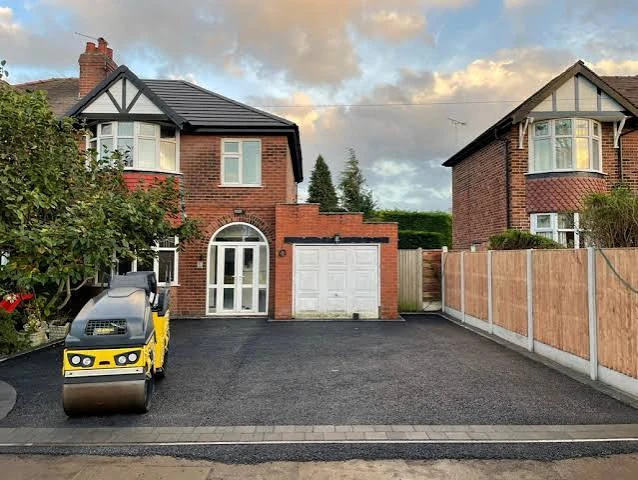
Here is the heart of the issue. Standard tarmac is not permeable. Water cannot pass through it, so every drop that lands on the surface has to go somewhere. On a driveway that was laid properly, that water is guided into a soakaway or a drainage channel on your own land. On far too many drives, it simply runs straight off the front and onto the pavement or road.
That runoff is exactly what the rules are designed to stop. Many older tarmac driveways were laid long before these rules were tightened, when sheeting water onto the road was normal practice. Plenty of newer ones fall short too, usually because the job was rushed or priced so low that the drainage was skipped to save time and money. The tarmac looks fine on the surface, but the water has nowhere to go except off your property, and that is where the compliance gap sits.
The signs your tarmac drive may not comply
You can often spot the problem yourself. If you watch your driveway during heavy rain and see water streaming off the front edge and onto the road or footpath, that is the clearest sign it is not draining into your own land. Pooling and standing water are another warning, because they show the surface has no proper falls or drainage guiding the water away.
It is also worth thinking about the age of the driver. If your tarmac was laid years ago, or came with the house and you have no idea how it was built, there is a fair chance no soakaway or channel drain was ever fitted. None of this means the tarmac needs ripping up in a panic, but it does mean the drainage is worth checking before it becomes an issue.
Why this matters more than it used to
For a long time, a driveway that shed water onto the road was simply overlooked. That is changing. Councils are paying closer attention to surface water and flooding, and increasingly, solicitors ask questions about driveway drainage during a house sale. A drive that does not comply can turn into an awkward hold-up at exactly the moment you want things to run smoothly.
There is a practical side too. Water that pools or runs off badly can work its way toward your home, damage the surface over time, and add to local flood risk. Getting the drainage right is not just about ticking a box. It protects your property, your neighbours, and your peace of mind.
The good news: tarmac can absolutely comply
If you love the look and value of tarmac, do not let any of this put you off. A tarmac driveway can meet the drainage rules comfortably. It just has to be planned the right way from the start. There are two proven routes, and both give you the clean tarmac finish you want.
The first is porous asphalt, a form of tarmac designed to let water drain straight through the surface. It looks much like standard tarmac, but the mix is open enough for rainwater to pass through into an open sub-base below, where it soaks away naturally. Because the water never runs onto the road, this option stays as permitted development with no application needed.
The second route is standard tarmac paired with proper drainage. Here the surface is laid to a gentle, carefully set fall so that water always flows toward a drainage point rather than off the front. A channel drain collects that water, usually across the threshold where the drive meets the road, and feeds it into a soakaway sized for your driveway. The result is a solid tarmac finish that keeps every drop of rainwater on your own land, exactly as the rules require.
Why the groundwork decides whether you comply
Whichever route suits your home, compliance is decided by the work you cannot see. This is the part that gets skipped on a cheap job, and it is the reason so many tarmac drives fall short in the first place.
A compliant tarmac driveway needs a properly built sub-base, correctly set falls, solid edging, and drainage that actually carries the water into your ground. Get these right and your driveway drains freely, meets the rules, and lasts for years. Get them wrong and you are left with runoff, pooling, and a surface that could raise questions with the council or a buyer down the line. The finish earns the compliments, but the groundwork does the real work.
How I make sure your tarmac driveway complies
This is where experience makes all the difference. With over 20 years laying driveways across Lancashire and the surrounding areas, we plan the drainage before we lay a single layer of tarmac. We look at how your ground drains, size the soakaway to suit it, set the falls correctly, and offer porous options where they are the right fit for your property.
My aim is to hand you a tarmac driveway that looks superb, meets the drainage rules without any drama, and holds up to everything the British weather brings. We keep you informed from the first quote to the final finish, use quality materials and proven methods, and price the work fairly. You get a driveway that is smart, compliant, and built to last, with none of the worry.
Worried your tarmac drive might not comply?
If any of this sounds familiar, or you are planning a new tarmac driveway and want it done properly from the ground up, let’s talk it through before you commit to anything. I will check how your drive drains, explain your options in plain terms, and give you a clear, no-obligation quote with no pressure to book. You walk away with honest advice and a firm price, whether or not you decide to go ahead.
Ready to get started? Call Advanced Driveway Solutions on 07944 680279, or come and see us at 10 Altham Rd, Morecambe LA4 4UG. Let’s give you a tarmac driveway that looks great, drains right, and keeps you on the safe side of the rules for years to come.